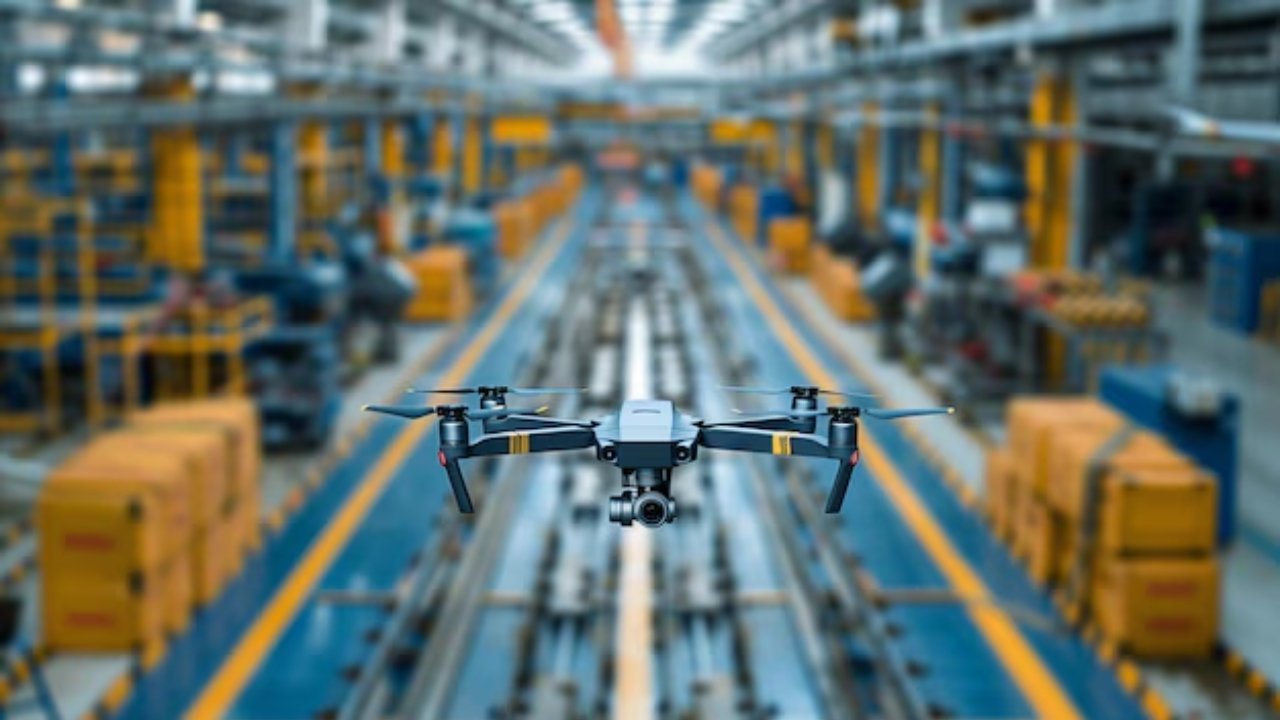
The rapid evolution of unmanned aerial vehicles (UAVs) has placed enormous emphasis on lightweight structures, durability, aerodynamic performance, and high reliability. As drones become smaller, stronger, and more efficient, the materials used to build them must meet increasingly demanding standards. This is where advanced resin systems and adhesives for UAVs play a crucial role.
Whether the goal is improved structural bonding, enhanced vibration resistance, or long-term environmental durability, resin-based adhesives — particularly Epoxy Resin, Urethane Resin, Resin Equivalents, and advanced composite resins — provide the foundation for modern UAV construction.
Why Composite Resins Are Essential for UAV Performance
Composite resins are the backbone of lightweight UAV structures. By combining resin systems with reinforcing fibers such as carbon or glass, manufacturers can create components that are significantly stronger and lighter than traditional metals. For drones where every gram matters, this advantage is substantial.
Key Benefits of Composite Resins in UAV Design
Exceptional strength-to-weight ratio, enabling longer flight times and higher payloads.
Resistance to fatigue and vibration, ensuring long-term structural stability.
Corrosion and moisture resistance, ideal for outdoor and high-humidity operation.
Superior design flexibility, allowing formation of aerodynamic shapes with minimal part count.
Compatibility with various bonding and coating processes, improving manufacturing efficiency.
Composite resins are used in wings, fuselages, payload bays, battery housings, gimbal mounts, and protective covers — virtually every structural and semi-structural area of a UAV.
Epoxy Resin: The Leading Material for UAV Adhesives and Structural Bonding
What Makes Epoxy Resin Ideal for UAVs?
Epoxy resin is known for its high mechanical strength, thermal stability, chemical resistance, and excellent adhesion to carbon fiber, fiberglass, metals, and engineered plastics. These characteristics make it the primary choice for structural adhesives and as the matrix resin for composite parts.
Advantages of Epoxy Resin in UAV Construction
High bonding strength for joining composite-to-composite or composite-to-metal structures.
Excellent fatigue resistance, crucial for UAV components exposed to continuous vibration.
Superior thermal and chemical stability, ensuring reliability in varying climates and terrains.
Strong fiber wet-out, which enhances laminate quality and structural uniformity.
Long service life, even under repeated load cycles and challenging conditions.
Epoxy resin is commonly used in:
Wing skins and ribs
Fuselage shells
Propeller and rotor components
Load-bearing bonding joints
Composite tooling for mold manufacturing
Its stability and strength make epoxy the “gold standard” of adhesives for UAVs requiring top-tier structural integrity.
Urethane Resin: A Flexible Alternative for Impact-Resistant UAV Components
While epoxy resin excels in stiffness and strength, there are UAV applications where flexibility, impact resistance, or vibration damping is more important. This is where Urethane Resin is often preferred.
Benefits of Urethane Resin
Higher elasticity and toughness compared to traditional epoxies
Better impact absorption, ideal for landing gear, battery brackets, or protective housings
Enhanced vibration damping, useful for drones with high-frequency propeller vibration
Good performance in dynamic environments, where shear forces are common
Urethane systems are often used for:
Shock-absorbing mount points
Sensor housings
Electronic enclosures
Non-structural panels needing flexibility
While not as strong as epoxy-based systems, urethane resin is invaluable in areas where ductility and resilience matter more than stiffness.
Resin Equivalents: Tailoring Material Performance for Specialized UAV Needs
“Resin equivalents” refers to resin systems engineered to mimic or enhance the performance of epoxy or urethane resins. These can include modified epoxies, hybrid resin systems, specialty thermosets, or next-generation polymer formulations.
Why Resin Equivalents Are Useful
They offer customized performance for unique UAV requirements.
They can improve moisture resistance, heat tolerance, or flexibility depending on the mission profile.
They provide cost-effective alternatives without sacrificing critical performance metrics.
Examples of situations where resin equivalents may be preferred:
UAVs operating in desert heat or arctic cold
Applications requiring extremely low weight
Components exposed to repetitive impact loads
Parts that must be repairable in the field
By selecting the right resin equivalent, manufacturers can fine-tune UAV characteristics such as stiffness, toughness, thermal behavior, and longevity.
How to Choose the Right Adhesive or Resin for UAV Manufacturing
Selecting the ideal resin or adhesive for a UAV project depends on several factors. The following framework helps guide decision-making:
1. Structural Requirements
Use epoxy resin for high-strength load-bearing parts.
Use urethane resin for flexible, impact-resistant, or vibration-damping components.
2. Environmental Conditions
High heat → heat-resistant epoxy or hybrid resin
High vibration → toughened epoxy or urethane
High humidity or salt exposure → moisture-resistant formulations
3. Manufacturing Method
Prepreg composites benefit from high-performance epoxies
Hand layup or vacuum infusion may require lower-viscosity systems
Rapid prototyping may favor resins with faster curing cycles
4. Weight vs. Durability
Composite resins offer the best overall strength-to-weight ratio
Resin equivalents can help optimize weight for non-primary structures
5. Cost and Production Volume
High-volume projects may choose resin systems optimized for faster processing
Custom UAVs or aerospace-grade drones typically prefer high-performance epoxies
The Future of UAV Manufacturing: Innovation Driven by Advanced Resin Systems
As UAV technology continues to evolve, adhesives and composite resins will remain central to innovation. Improvements in resin chemistry — such as faster curing times, higher toughness, improved thermal stability, and better environmental durability — will allow future drones to fly longer, carry more weight, and withstand harsher conditions.
High-performance resin systems are especially important in next-generation UAVs used for:
Long-distance mapping
Industrial inspections
Delivery services
Military and defense applications
Autonomous surveillance
Lightweight composites, structural adhesives, and engineered resin equivalents will continue to define the boundaries of what UAVs can achieve.
Adhesives for UAVs are far more than simple bonding materials — they are fundamental to the structure, function, and safety of every modern drone. Epoxy Resin provides unmatched strength and stability for structural components, Urethane Resin offers flexibility and impact resistance, Resin Equivalents allow specialized performance tuning, and composite resins form the lightweight backbone of all advanced UAVs.
By understanding the properties of each resin system and applying them strategically, manufacturers can produce UAVs that are lighter, tougher, more reliable, and more efficient than ever before.